Plenary Speakers
This page will be updated as new speakers are confirmed.
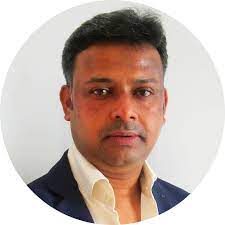
Professor Avik Bhattacharya
Avik Bhattacharya received the integrated M.Sc. degree in Mathematics from the Indian Institute of Technology, Kharagpur, India, in 2000 and the Ph.D. degree in remote sensing image processing and analysis from Telecom Paris-Tech, Paris, France, and the Ariana Research Group, Institut National de Recherche en Informatique et en Automatique (INRIA), Sophia Antipolis, Nice, France, in 2007.
He is a Professor at the Centre of Studies in Resources Engineering, Indian Institute of Technology Bombay (CSRE, IITB), Mumbai, India, where he heads the Microwave Remote Sensing Lab (MRSLab). Before joining IITB, he was a Canadian Government Research Fellow at the Canadian Centre for Remote Sensing (CCRS) in Ottawa, ON, Canada. He received the Natural Sciences and Engineering Research Council of Canada visiting scientist fellowship at the Canadian national laboratories from 2008 to 2011. His current research interests include SAR polarimetry theory, statistical analysis of polarimetric SAR images, and applications of Radar Remote Sensing in Agriculture, the Cryosphere, Urban and Planetary studies.

Professor Mihai Datcu
Prof. Mihai Datcu is Professor, and director of the Research Center for Spatial Information (CEOSpaceTech) at National University of Science and Technology POLITEHNICA Bucharest, and also Visiting Professor with the Φ-lab of the European Space Agency (ESA). His research concerns theoretical aspects of information theory, Bayesian inference, computational sensing, artificial intelligence and quantum machine learning with applications to SAR Earth Observation. From 1993 to 2023, he has been with the German Aerospace Center (DLR), as Senior Scientist with the Remote Sensing Technology Institute (IMF). From 1992 to 2002, he had a longer Invited Professor Assignment with the Swiss Federal Institute of Technology (ETH Zurich). From 2005 to 2013 has been Professor holder of the DLR-CNES Chair, at the Paris Institute of Technology. He was awarded National Order of Merit with the rank of Knight, for outstanding international research results, by the President of Romania in 2008, and he was the recipient of the Chaire d'excellence internationale Blaise Pascal 2017 for international recognition in the field of data science in EO and in 2022 he got the IEEE GRSS David Landgrebe Award in recognition of outstanding contributions to Earth Observation analysis using innovative concepts for big data analysis, image mining, machine learning, smart sensors, and quantum resources. He has served as a Co-organizer for international conferences and workshops and as Guest and Associate Editor for IEEE and other journals. He is IEEE Fellow.

Dr Richard Gloaguen
Richard Gloaguen is the Head of the Exploration Department at the Helmholtz-Institute Freiberg for Resource Technology. He received the Ph.D. degree “Doctor Communitatis Europae” in marine geosciences from the University of Western Brittany, Brest, France, in collaboration with the Royal Holloway University of London, U.K., and Göttingen University, Germany, in 2000.
He was a Marie Curie Post-Doctoral Research Associate at the Royal Holloway University of London from 2000 to 2003. He led the Remote Sensing Group at University Bergakademie Freiberg, Freiberg, Germany, from 2003 to 2013. Since 2013, he has been heading the division “Exploration Technology” at the Helmholtz-Institute Freiberg for Resource Technology, Freiberg. He is currently involved in imaging sensor development, data science, and mineral mapping. His research interests focus on multisource and multiscale remote sensing integration using computer vision and machine learning.

Dr Sara Mikaloff-Fletcher
Sara Mikaloff-Fletcher is a Principal Scientist at the National Institute for Atmospheric and Water Research (NIWA). Her research focuses on using greenhouse gas observations from ground-based stations, aircraft, ships and satellites to quantify greenhouse gas emissions. She is the Science Leader for New Zealand's MethaneSAT Science Programme, a multi-institutional research programme focused on mapping agricultural emissions around the world from satellite data. In addition, she leads the CarbonWatch-NZ research programme and NIWA's long running Atmospheric Composition and Climate Change Programme.
Prior to joining NIWA in 2009, Dr Mikaloff-Fletcher was a Research Scholar at Princeton University, where she used atmospheric and oceanic data and statistical methods to understand air-sea and air-land carbon exchange. Her post doctoral research at the University of California, Los Angeles (2003 C2006) focused on applying inverse methods to quantify present day and pre-industrial air-sea carbon exchange. She earned a PhD in Chemistry from the University of Colorado in Boulder in 2003, where she used atmospheric inverse modelling to estimate global and regional methane emissions from atmospheric measurements of methane and its isotopes.

Dr Charles E. Miller
Charles E. Miller is a Principal Scientist with the Jet Propulsion Laboratory, California Institute of Technology and a Visiting Associate in Environmental Science and Engineering at Caltech. He has over 25 years of experience leading satellite and sub-orbital projects for NASA Earth Sciences. He helped develop the Orbiting Carbon Observatory (OCO) mission for space-based measurements of atmospheric CO2 and served as OCO Deputy PI and Science Team lead. He was Principal Investigator of the EV-S1 Carbon in Arctic Reservoirs Vulnerability Experiment (CARVE), a 5-year airborne science investigation that revealed critical dependencies between the Arctic carbon cycle and disturbances such as permafrost thaw and wildfires.
He currently serves as Principal Investigator of the Next Generation Orbiting Carbon Observatory (OCO-neXt), the Carbon Balance Observatory (CARBO) instrument, and the Megacities Carbon Project. He serves as NASA Lead for the NASA-ESA Arctic Methane and Permafrost Challenge, Deputy Science Lead for NASA’s Arctic-Boreal Vulnerability Experiment (ABoVE), and Deputy Mission Scientist for NASA’s Surface Biology & Geology mission. Dr. Miller conducts research in carbon cycle science, Arctic system science, atmospheric photochemistry, and molecular spectroscopy, with an emphasis on developing innovative spectroscopic solutions for satellite and airborne remote sensing of greenhouse gases and anthropogenic emissions. He received a B.S. in Chemistry and History from Duke University, and a Ph.D. in Chemical Physics from the University of California, Berkeley.

Mr Mark Rocket
Mark was the seed investor and co-Director of Rocket Lab from 2007 to 2011. Mark is the CEO of Kea Aerospace, a company that is building solar-powered aircraft that will continuously fly for months in the stratosphere. He is the President of Aerospace New Zealand, which is an industry-led body working to grow the aerospace sector.

Dr Keely Roth
Dr. Keely Roth is the Lead Hyperspectral Scientist at Planet Labs, PBC. She has over 15 years’ experience in remote sensing and geospatial analysis and specializes in imaging spectroscopy applications for vegetation. She received her Masters and PhD degrees in Geography from the University of California, Santa Barbara. Keely joined Planet in 2021 as part of the Carbon Mapper mission, a public-private partnership developing a hyperspectral satellite constellation to detect greenhouse gas emissions and generate a suite of cutting-edge land and ocean data products. Her work on the mission spans calibration and validation and science algorithms for derived data products. Dr. Roth is a part-time Adjunct Assistant Professor of Geography at the University of Utah, and an active member of the IEEE Geoscience and Remote Sensing Society Administrative Committee. Prior to joining Planet, she was a remote sensing scientist and data science manager at The Climate Corporation, working to develop data science-driven digital agriculture tools for farmers worldwide.

Dr Saibun Tjuatja
Saibun Tjuatja received BSEE and Ph.D. from the University of Texas at Arlington (UTA) and MSEE from Purdue University. He is currently an Associate Professor and Undergraduate Program Advisor at UTA Department of Electrical Engineering. His research focuses on electromagnetic wave propagation and scattering in random media with applications to remote sensing and imaging, and subsurface sensing. Dr. Tjuatja served as a General Co-Chair of IEEE International Geoscience and Remote Sensing Symposium (IGARSS) 2017 in Fort Worth, Texas. He is the 2023-2024 Executive Vice President of IEEE Geoscience and Remote Sensing Society, an Associate Editor of the IEEE Transactions on Geoscience and Remote Sensing, and the Chair of Photonics and Electromagnetics Research Symposium Conference Publications Committee. He has been serving as a US National Science Foundation (NSF) proposal reviewer since 2000. Dr. Tjuatja is a member of Tau Beta Pi, Senior Member of IEEE, and Fellow of the Electromagnetics Academy.
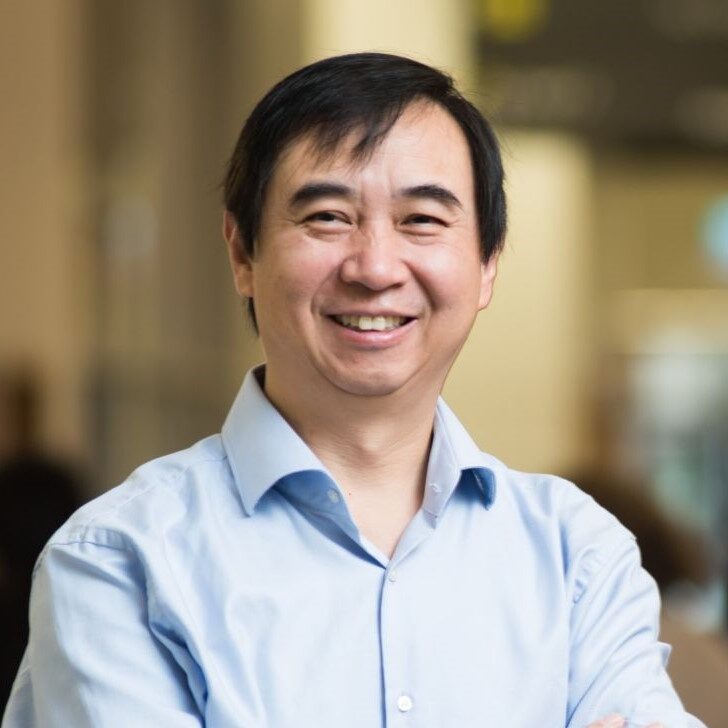
Professor Mengjie Zhang
Mengjie Zhang is a Fellow of Royal Society of New Zealand, a Fellow of Engineering New Zealand, a Fellow of IEEE, an IEEE Distinguished Lecturer, currently Professor of Computer Science at Victoria University of Wellington, where he heads the interdisciplinary Evolutionary Computation and Machine Learning Research Group. He is also the founding Director of the Centre for Data Science and Artificial Intelligence at the University.
His research is mainly focused on AI, machine learning and big data, particularly in evolutionary learning and optimisation, feature selection/construction and big dimensionality reduction, computer vision and image analysis, scheduling and combinatorial optimisation, classification with unbalanced data and missing data, and evolutionary deep learning and transfer learning.